What happened
A few years later, it never really went away.
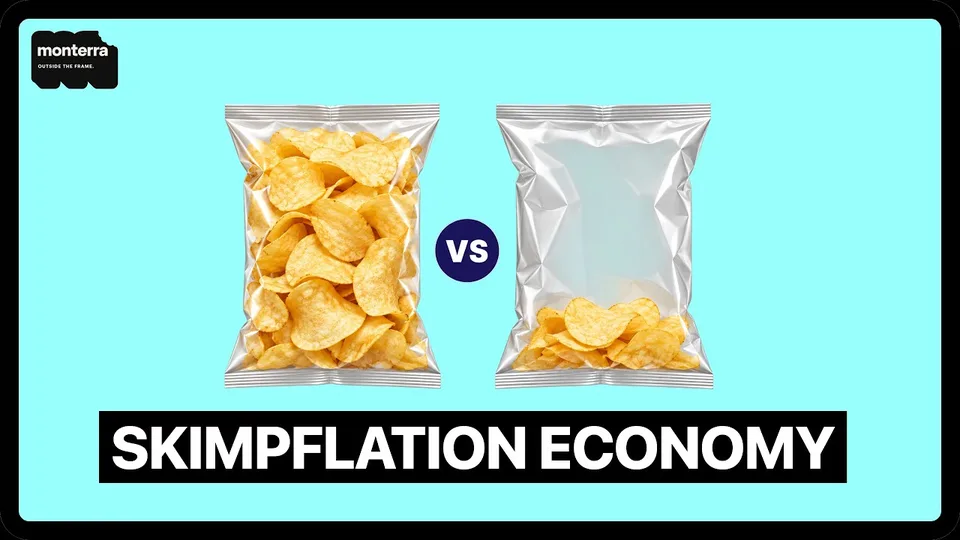
In this Monterra Original, we return to the skimpflation economy and look at what changed. New research published in 2026 found that consumers react more negatively to reductions in quality than to higher prices or smaller package sizes.
But this story goes far beyond groceries.
We examine shrinkflation, planned obsolescence, pressure on mature consumer markets, and how ownership is changing through subscriptions, software restrictions, proprietary parts, and connected products.
At the same time, enormous amounts of capital are moving into AI, robotics, data centers, energy infrastructure, and automation.
Economist Carlota Perez’s work on technological revolutions helps explain how the old economy can keep operating while the infrastructure of the next one is built around it.
Skimpflation may be one way that transition is showing up in everyday life.
Have you noticed a product getting smaller, cheaper, harder to repair, or simply worse? Tell us in the comments.
More documentaries and original stories: https://gomonterra.com
Monterra produces independent documentary and editorial content based on publicly available reporting, research, company materials, public records and other sources believed to be reliable at the time of production.
This video is provided for informational, educational, journalistic and entertainment purposes only and does not constitute financial, investment, legal, tax, medical, employment or other professional advice.
Statements concerning companies, individuals, events and business decisions are presented within the context of the documentary and information available at the time of publication. Opinions, interpretations and conclusions are editorial in nature.
Company names, product names, trademarks and logos remain the property of their respective owners. Their appearance does not imply endorsement or affiliation with Monterra.